
Honey Guide
Eleven honeys,
eleven characters.
Every Greek honey carries its own character. Swipe left or right to reveal the flavour profile of each variety.
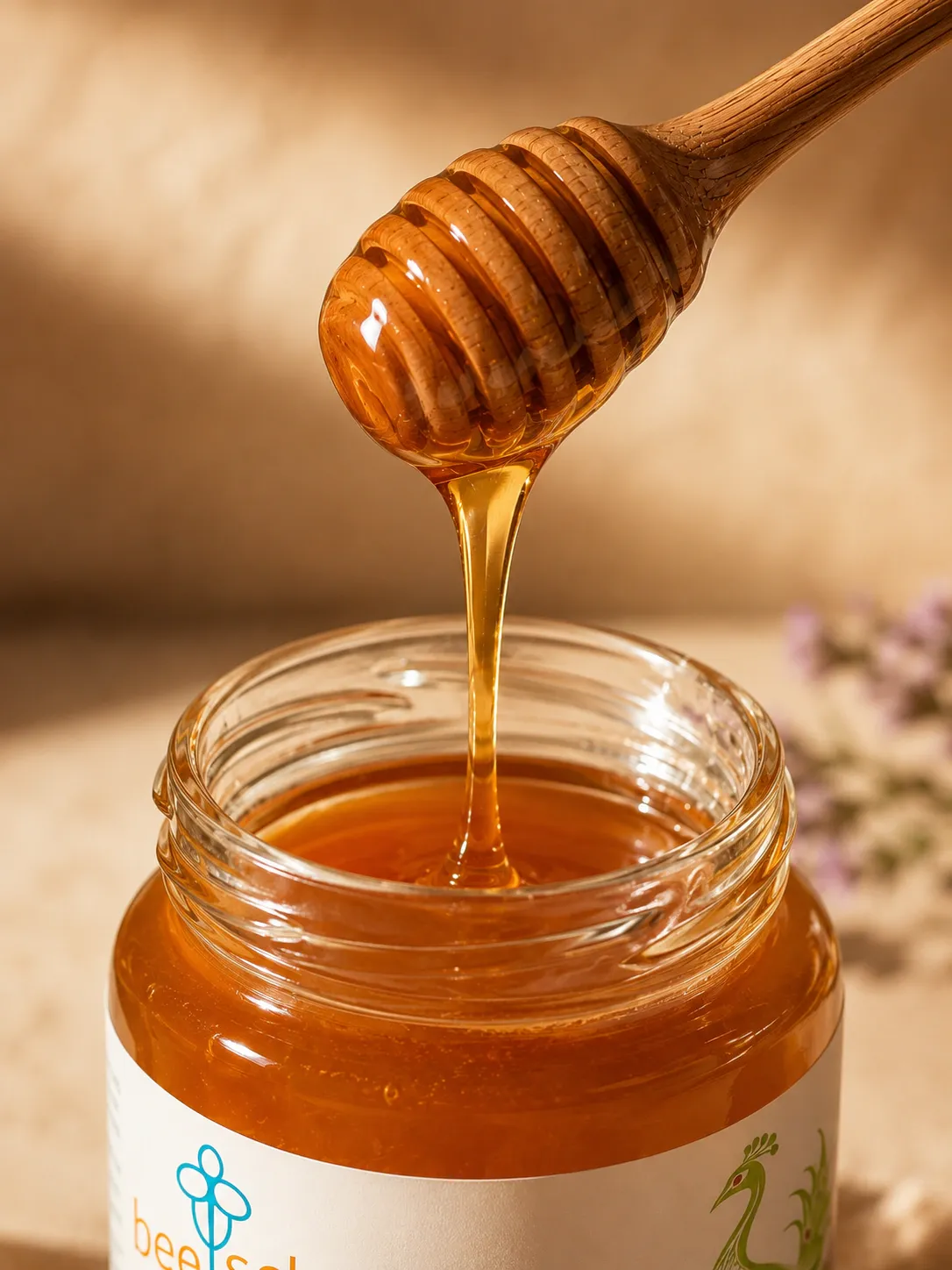
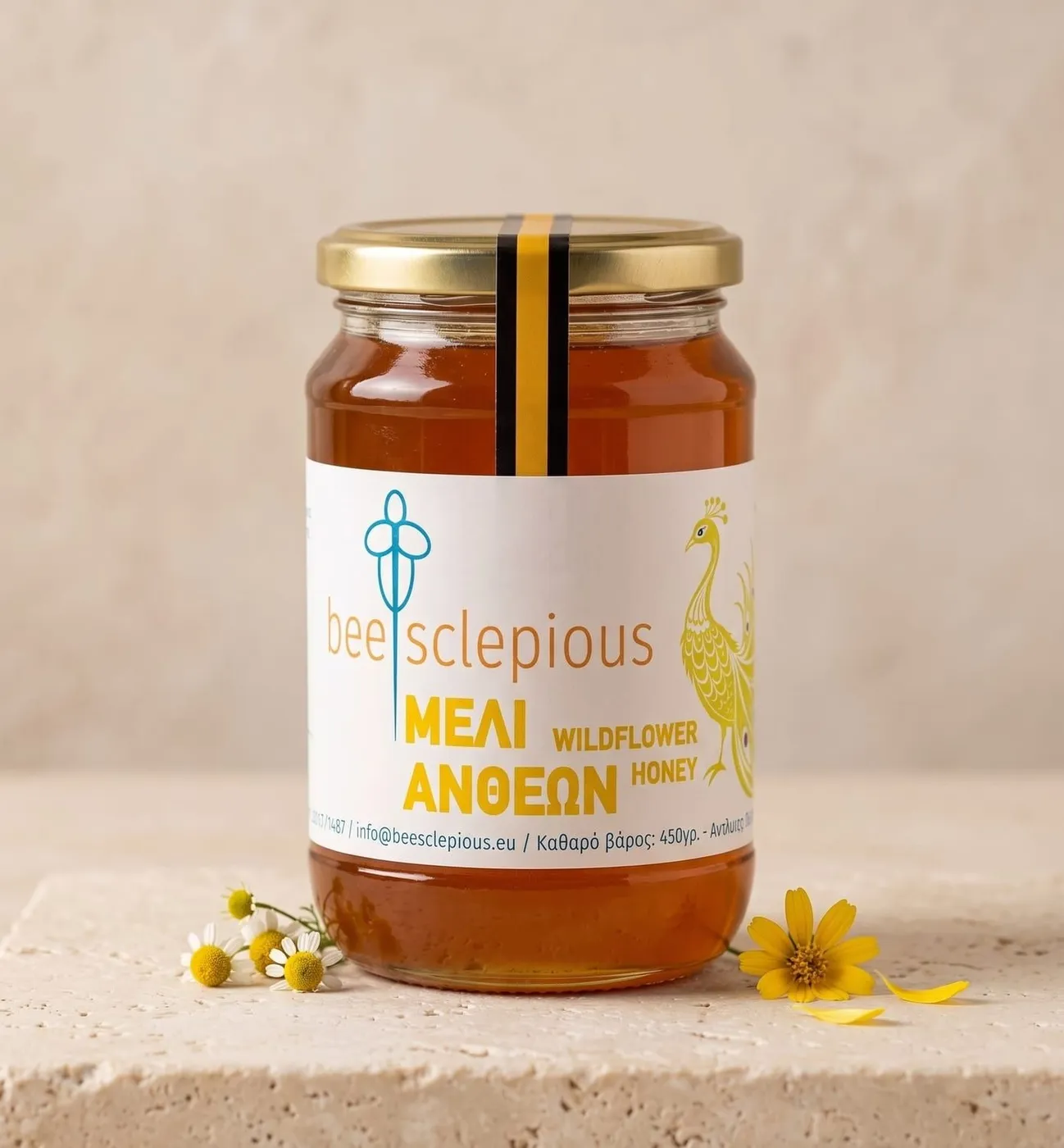
Wildflower
The entire Greek spring in a single jar.
The everyday honey of the household: on warm bread with butter, in mountain tea with lemon, or spooned over strained yoghurt with fresh fruit.
Floral, balanced, with notes of stone fruit.
- ·Bread and butter
- ·Breakfast
- ·Vinaigrettes
At a glance
Eleven characters,
one lineage.
What’s worth knowing about honey
Is your honey 100% pure? And how do I spot adulterated honey?
Our honey is 100% pure. It comes straight from the hives, with nothing mixed in: no syrups, no sugar, no imported honey. Genuine honey crystallises naturally over time, has a full aroma, and doesn’t dissolve instantly in cold water; every batch of ours has a single, clear origin.
My honey crystallised. Has it gone bad?
No. Crystallisation is a natural sign of pure, raw honey and doesn’t affect quality. Warm the jar gently in lukewarm water (below 40°C) to liquefy it again without losing its nutrients.
What is raw (unheated) honey?
Raw honey is honey that has not been heated or pasteurised, so it keeps its enzymes, antioxidants and pollen. All our honey is bottled at low temperature to stay alive.
Can I bring honey on a plane from Greece?
In checked luggage there’s no limit. In cabin baggage honey counts as a liquid, so the 100 ml-per-container rule applies within the EU. For gifts, larger jars travel safely in checked luggage, and we wrap them protectively.
Which honey is best for a cough or sore throat?
Dark, aromatic honeys (thyme, pine, heather) are traditionally chosen for the throat thanks to their antimicrobial and antioxidant properties. A spoonful in warm water or tea is the classic remedy. (Not a substitute for medical advice; not for infants under one year.)
How do I store honey, and how long does it last?
In a cool, dark place with the lid firmly closed, not the fridge, which speeds up crystallisation. Honey doesn’t spoil: it keeps for years. Use a dry spoon so no moisture gets in.
Which variety of Greek honey should I choose?
Thyme is the most famous, aromatic and refined; pine is less sweet and rich in trace elements; fir (“vanilla”) is delicate and rare, ideal as a gift. Our Honey Guide breaks down each variety in detail.