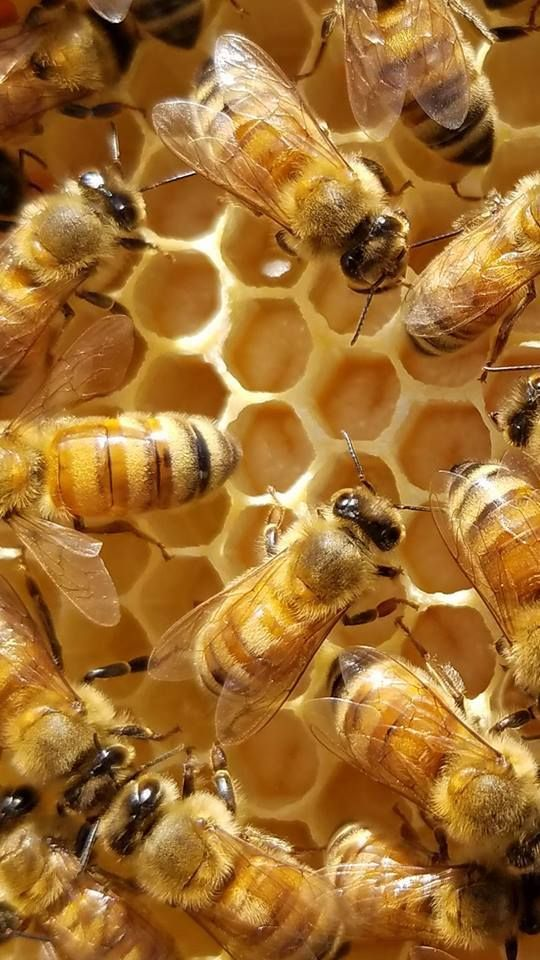
Open a beehive and the first thing you notice is not the honey. It is the glue. Every gap is sealed, the frames stick to the box, and your fingers smell of resin for hours. That glue is propolis.
What propolis is made of
Bees collect resin from the buds and bark of trees, carry it home on their hind legs and mix it with wax. The result is a sticky, fragrant material. It is made up mainly of resins (about half), wax (about a third), essential oils and a little pollen. Its colour depends on the trees nearby: it can be yellow, green, reddish or dark brown.
What the bees use it for
- To seal cracks and gaps in the hive, so that wind and rain stay out.
- To narrow the entrance before winter. This is where the name comes from: in Greek, “pro” means in front of and “polis” means city, so propolis is the material at the gate of the bee city.
- To smooth and line the inside of the hive.
- To cover intruders too large to carry out, such as a small lizard or a mouse, which the bees seal in a layer of propolis.
How beekeepers collect it
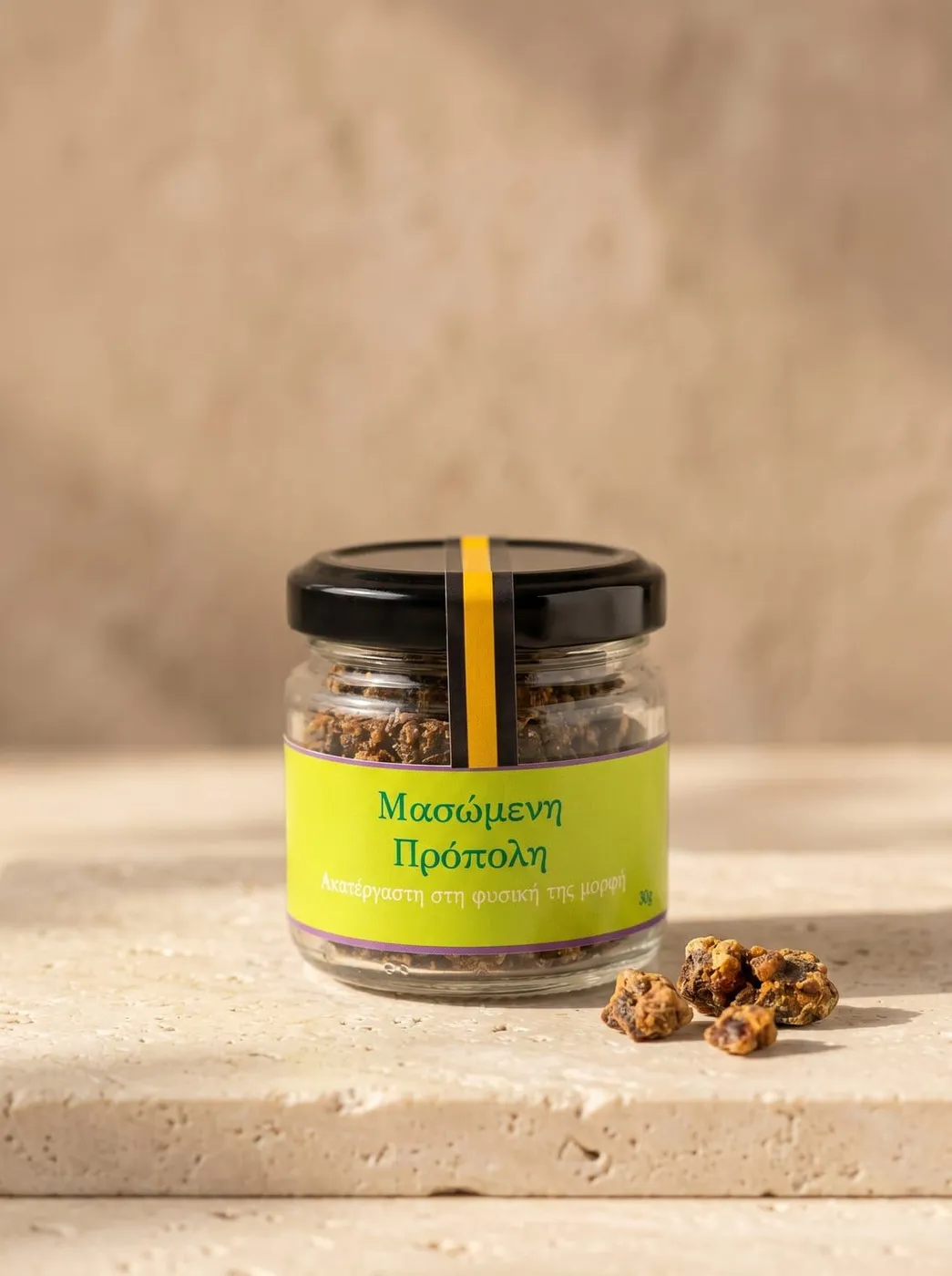
Propolis is soft and sticky on a warm day, and hard and brittle in the cold. Beekeepers use this. They scrape it from the frames and the walls of the hive, or lay a fine plastic mesh under the lid. The bees fill the holes with propolis, and the beekeeper then chills the mesh so that the propolis breaks off cleanly.
Propolis in our shop
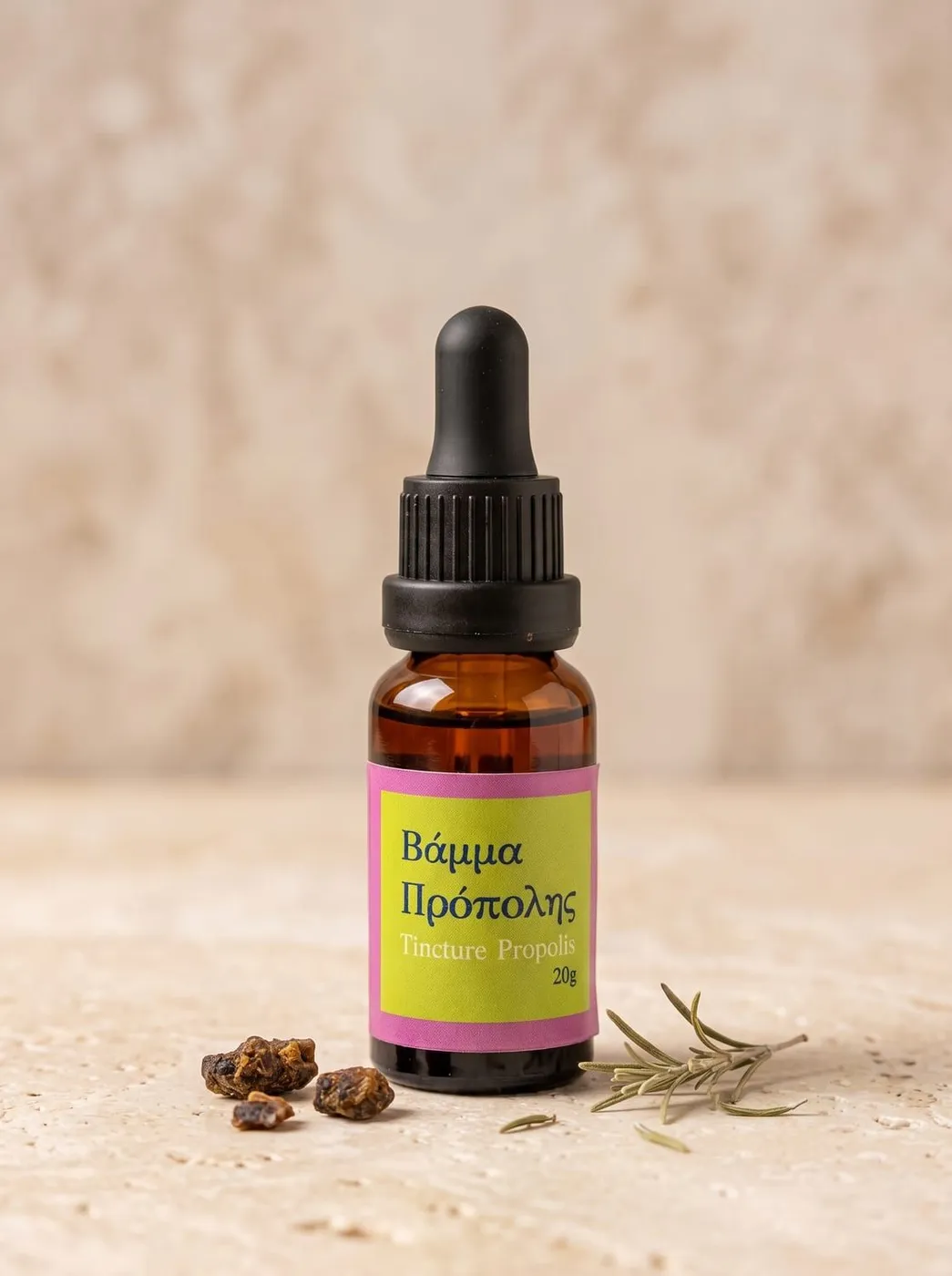
Propolis has been known since antiquity, and its name is Greek. Today we offer Beesclepious propolis tincture, a propolis spray, chewable propolis with a strong, resinous taste, and a beeswax salve with propolis. Follow the directions on each pack.
You will find them all in our shop, or at our honey shop at Asklipiou 24 in Athens; directions are on our visit page.