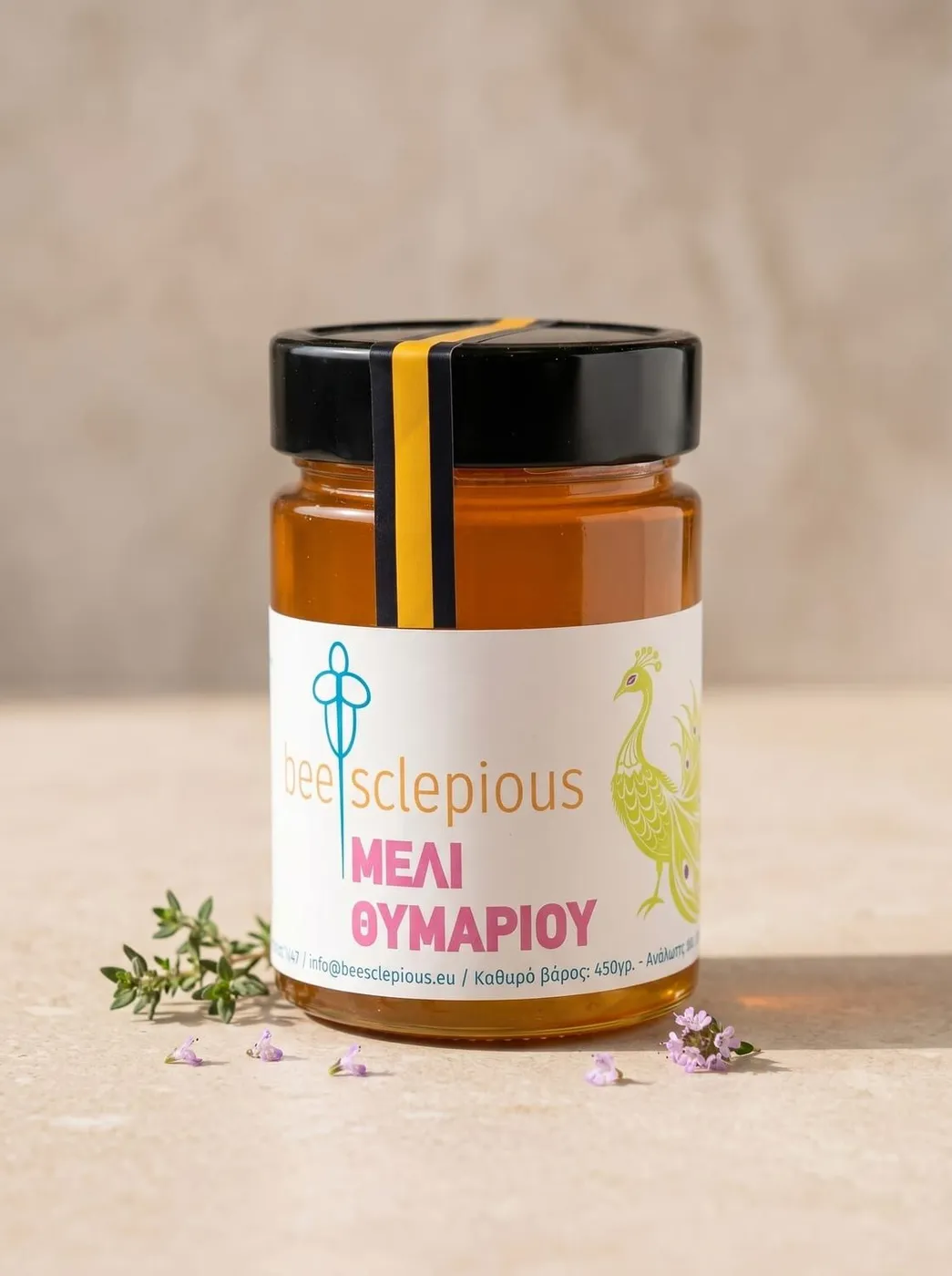
If one honey stands for Greece, it is thyme honey. It is the jar that visitors ask for first, and the honey Greeks grow up with, spooned over yoghurt or stirred into mountain tea.
Where thyme honey comes from
Greek thyme honey comes from wild thyme (Thymus capitatus), a low, woody shrub that grows on dry, stony, sunny slopes all over Greece, from the mountains around Athens to the islands. It flowers in early summer, and for a few weeks whole hillsides turn pink and purple and hum with bees. The harvest follows in late June.
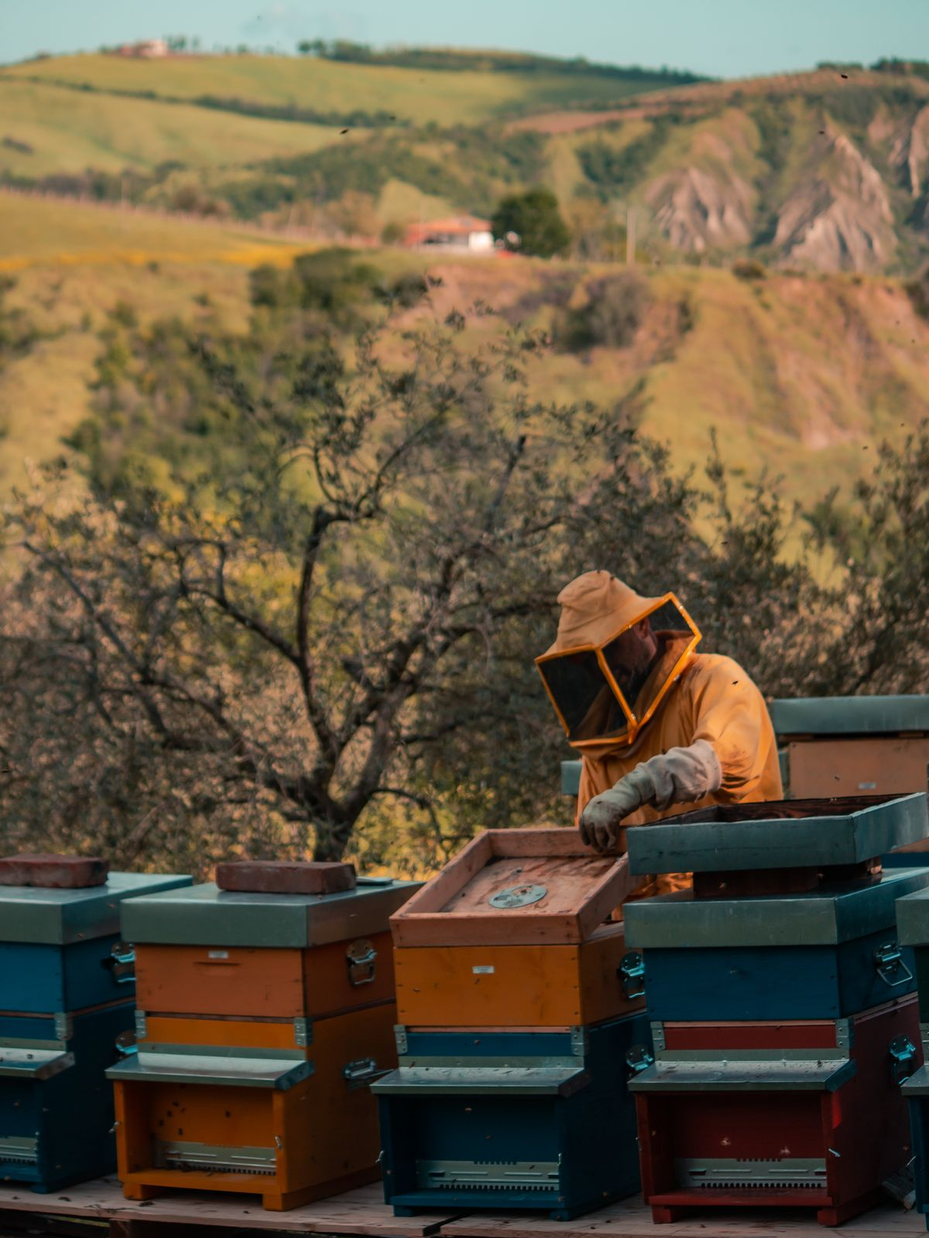
Our thyme honey comes from three places: Mount Kithaironas, the Mani in the southern Peloponnese, and Crete. Our beekeepers move their hives to the thyme as it begins to flower.
How it tastes
Thyme honey is pale gold, almost sunlit. The aroma is strong and unmistakable: thyme warmed by the sun. The taste is clean and sweet, with a faint herbal bitterness at the end.
It crystallises slowly, usually after six to twelve months, to a fine, smooth grain. That is natural, and a while in warm water makes it runny again; see why honey crystallises.
How to enjoy it
- Over strained yoghurt, perhaps with walnuts.
- In mountain tea or chamomile, with a slice of lemon.
- On fresh mizithra, or with feta and walnuts.
- Neat, from the spoon, to taste the aroma on its own.
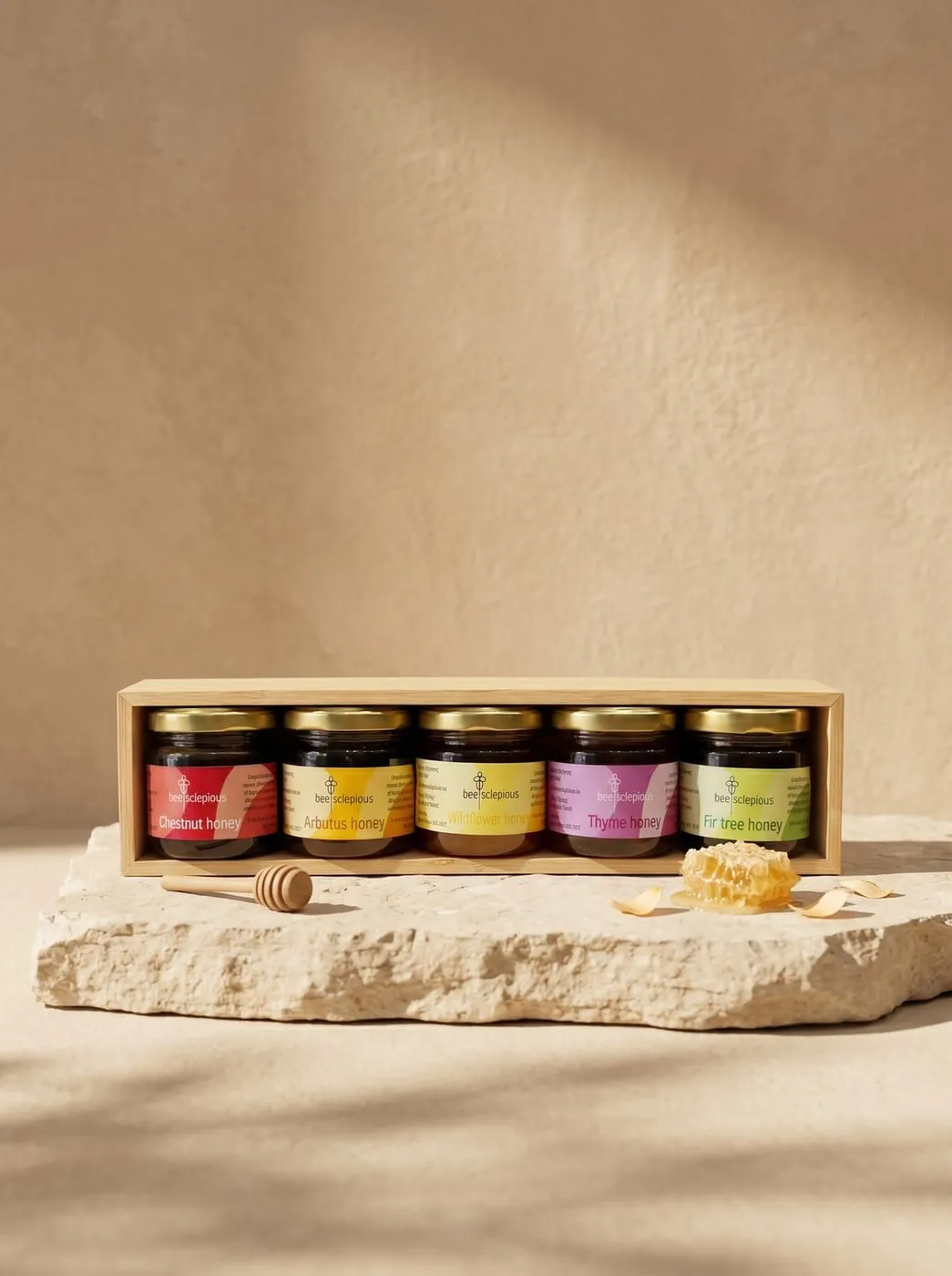
Like all our own honey, it is raw, unfiltered and never heated, and we pack it in small batches. To compare it with the other great Greek honey, read thyme or pine honey. Every variety we keep is in our honey guide.