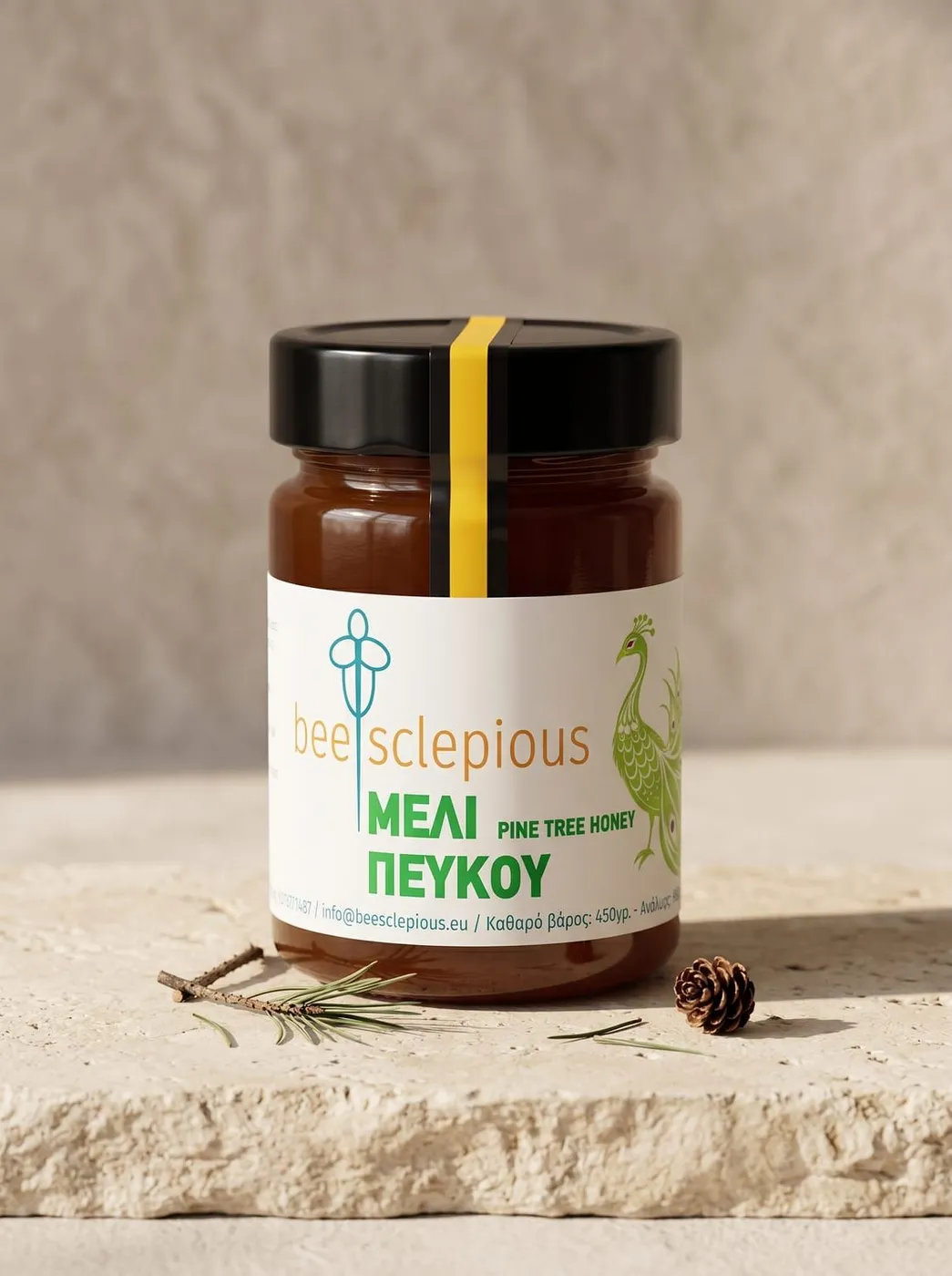
Most honey starts in a flower. Pine honey does not. It is a honeydew honey, and that one fact explains its colour, its taste and why it behaves so differently from thyme or orange blossom honey.
What honeydew is
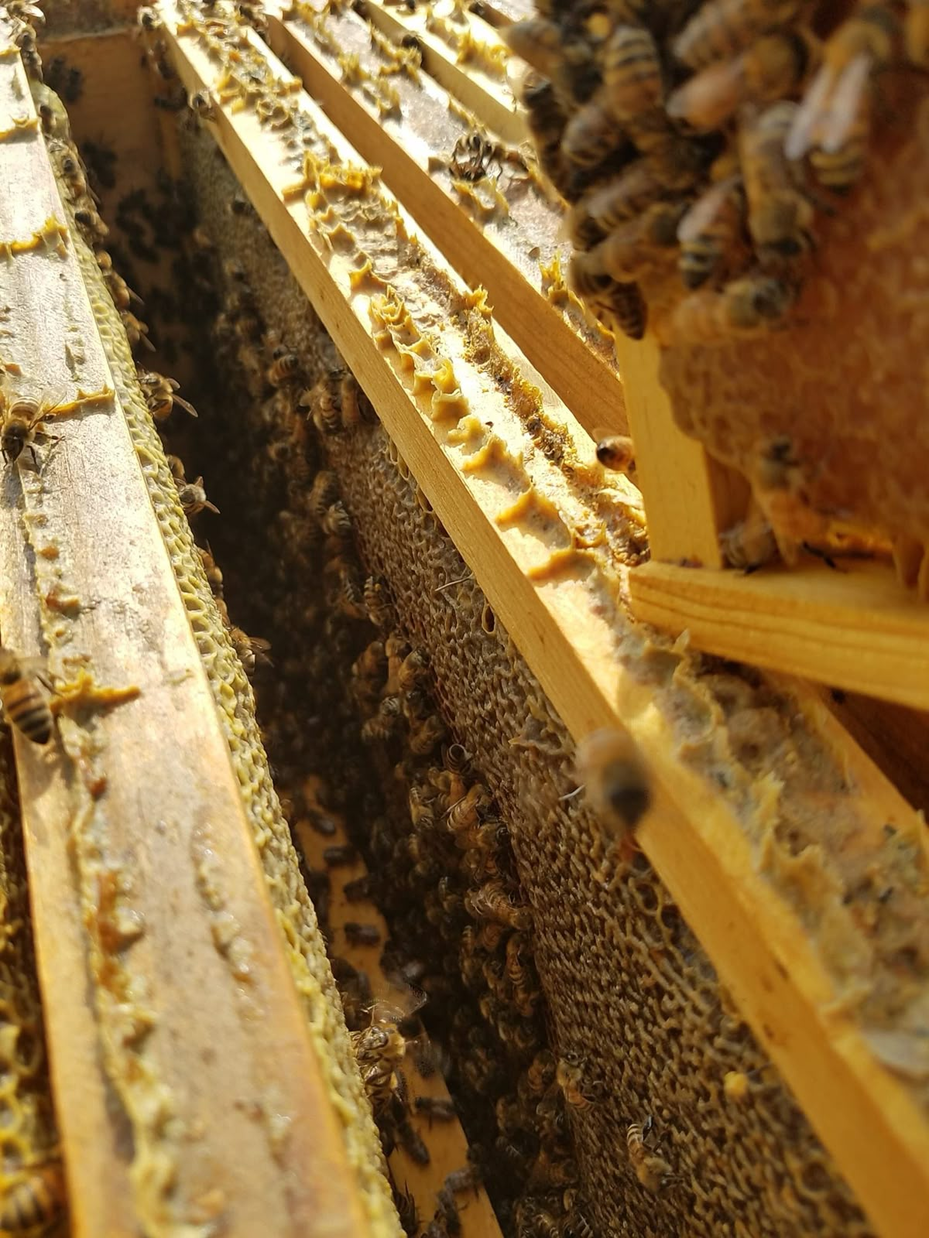
On the bark of Greek pines lives a small insect, Marchalina hellenica. It feeds on the sap of the tree and gives off the excess as sweet, sticky droplets. This is honeydew. Bees collect it just as they collect nectar, carry it back to the hive and turn it into honey.
Where Greek pine honey comes from
Pine honey is the most common honey in Greece. It comes mainly from Euboea, Halkidiki and Thasos, where the pine forests are large. Our pine honey comes from central Euboea, from the Aleppo pine (Pinus halepensis), and we harvest it mainly in autumn.
Taste, colour and texture
Pine honey is less sweet than blossom honeys, with notes of resin and damp wood and a full, almost savoury finish. Its colour is deep amber, and the autumn harvest is darker than the spring one.
It crystallises slowly and often stays liquid for a long time, because honeydew honeys hold relatively little glucose. There is more on that in why honey crystallises.
How to use it
Its gentle sweetness makes pine honey a cook’s honey: try it with aged kefalotyri, on wholemeal bread, in marinades for roast meat or in a cup of black tea. Like all our own honey, it is raw, unfiltered and never heated.
Curious how it compares with the famous thyme honey? Read thyme or pine honey, or see every variety in our honey guide.