
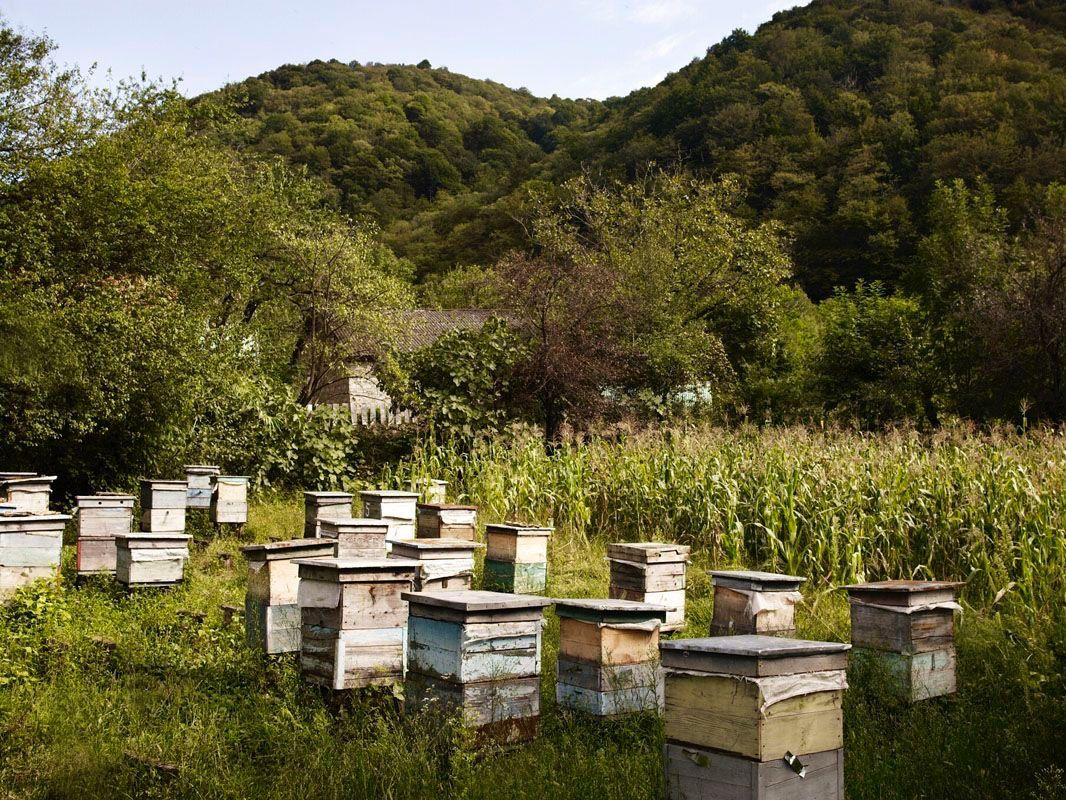
Greek honey follows the calendar. Each variety comes from one plant, or one kind of forest, at one moment of the year, and a good beekeeper follows that moment from place to place.
This is nomadic beekeeping: the hives travel by truck from the orange groves of the Peloponnese to the thyme slopes and the fir forests, wherever the next bloom is about to begin. Here is the year as our own jars see it. Each variety has a full profile in our honey guide.
Spring: orange blossom and wildflowers
- Orange blossom honey, from the orange groves around Argos, harvested in April and May. Pale gold, almost clear, with a delicate citrus aroma. It sets within a few months to a fine, creamy grain.
- Wildflower honey, from Ano Alepochori, in the mountains of western Attica, harvested in April and May. A mix of wild flowers and herbs, so its colour and taste change from year to year. Floral and balanced, with notes of fruit.
Late spring and early summer: sage and thyme
- Sage honey, from the wild sage (Salvia fruticosa) of the Mani, harvested in May and June. One of the mildest Greek honeys: light in colour, with a delicate floral note and low bitterness.
- Thyme honey, from Mount Kithaironas, the Mani and Crete, harvested in late June. Pale gold and intensely aromatic, with a herbal bitterness at the end. The best-known Greek honey.
Summer: the mountain forests
As the lowlands dry out, the bees go up into the forests. These honeys come mostly from honeydew, the sweet droplets that bees collect from trees. They are darker and less sweet, and they crystallise slowly.
- Fir honey, from the Greek fir (Abies cephalonica) of mountainous Corinthia, harvested between May and July. Light amber, with a fine aroma of resin and a gentle sweetness.
- Vanilla fir honey, from the same firs, in late summer. Pearly amber, thick and creamy, with a hint of vanilla. It does not crystallise, and it is one of the rarest Greek honeys.
- Chestnut honey, from Greek chestnut forests, harvested in July. Deep brown and woody, with a strong bitterness at the close.
- Oak honey, from the oak forests of mountainous Corinthia, harvested in summer. Almost black and thick, with notes of wood and caramel and only a light sweetness.
Autumn into winter: pine, heather and arbutus
- Pine honey, from central Euboea, harvested mainly in October. A honeydew honey with a resinous, woody taste, less sweet than blossom honeys. It crystallises slowly and often stays liquid.
- Heather honey, from the autumn heather (Erica manipuliflora) around Ano Alepochori. Deep orange to copper, with a strong aroma and a slightly bitter taste. It sets very quickly, often within one to three months.
- Arbutus honey, from the strawberry tree (Arbutus unedo) at Veniza, in the foothills of Mount Pateras. The arbutus flowers in November and December, when almost nothing else does, so this is the last honey of the year. It is dark, with a reddish glow and a strong, distinctly bitter taste, with notes of coffee and cocoa.
Why the calendar matters
The season shows in the jar. Spring honeys are light, floral and sweet. The forest honeys of summer and autumn are darker, deeper and less sweet. The weather plays its part too: a dry spring or a wet autumn can move a harvest by weeks, and colour and taste change a little from year to year. That is the nature of raw honey from one place and one season.
To taste the whole year at once, the 9 honey varieties box holds nine 50 g jars, from orange blossom to arbutus. Or come to our shop at Asklipiou 24 in Athens and taste the season’s honeys side by side; see our visit page.
For two of the classics compared closely, read thyme or pine honey.


